
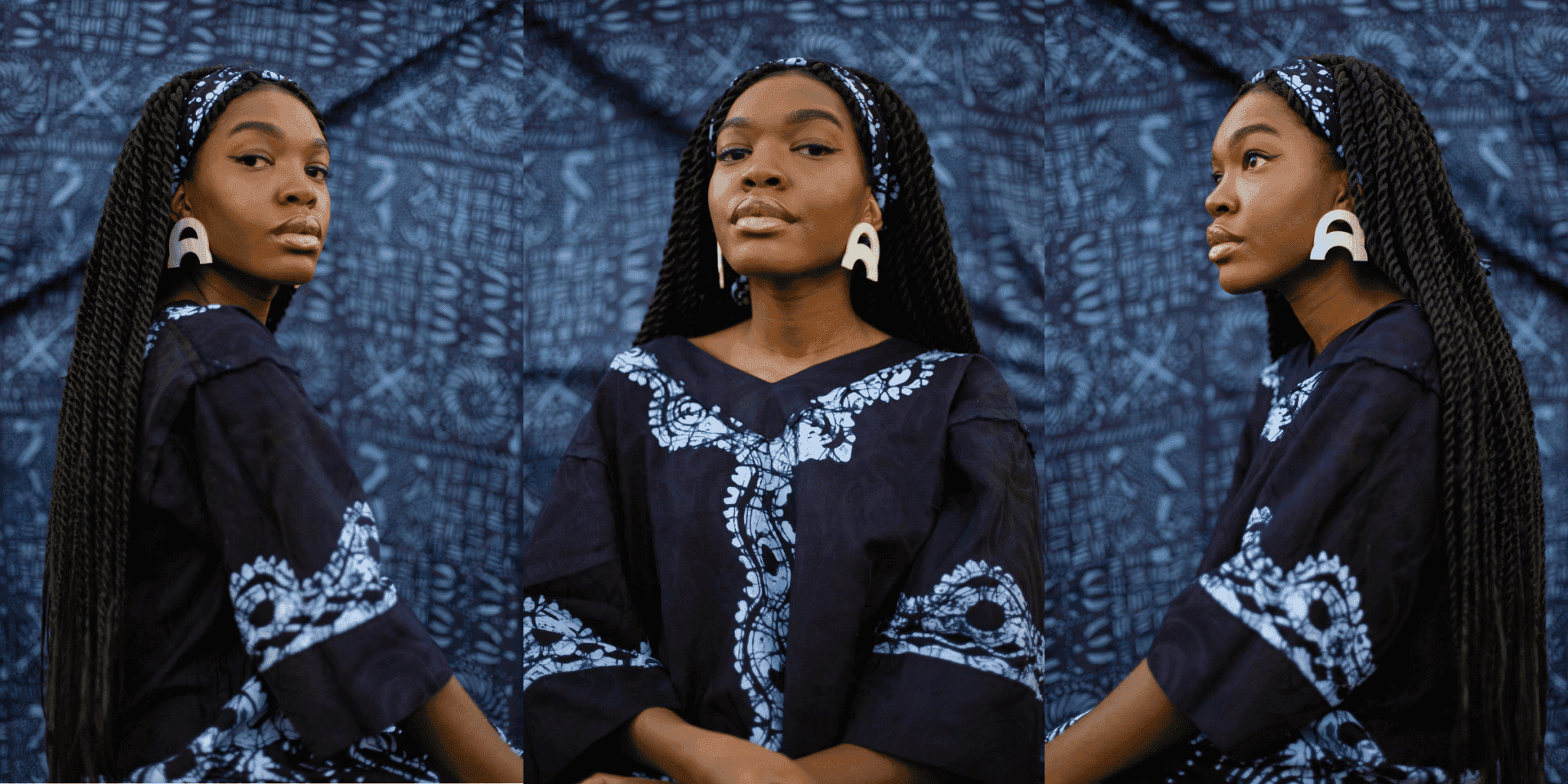
Àdìrẹ, the iconic indigo-dyed textile of the Yoruba people of south-western Nigeria, has evolved from a centuries-old craft into one of Africa’s most recognisable fashion traditions, celebrated globally for its artistry, cultural symbolism and enduring influence on contemporary style.
Derived from the Yoruba words adi (“to tie” or “prepare”) and re (“to dye”), Adire refers not simply to cloth, but to the intricate process of resist-dyeing cotton fabrics to create striking blue-and-white patterns. Traditionally produced and worn by Yoruba women, the textiles were commonly fashioned from two strips of factory-made cotton sewn together and wrapped around the body.
Although the technique dates back to the 19th century, the term “Adire” gained prominence in the early 20th century, particularly during the 1920s when imported European cotton fabrics inspired artisans to experiment with increasingly elaborate designs. By the 1960s, Adire had become a global fashion statement, especially in the United States, where tie-dyed indigo fabrics were embraced by the hippie movement.
Today, Adire remains central to Nigeria’s creative economy and fashion identity, continuing to influence designers, artists and textile makers worldwide.
The ancient art of indigo dyeing
The production of Adire has historically been led by women, who prepared and dyed the cloth using imported indigo grains or locally cultivated indigo leaves. The leaves were fermented and mixed with softened water and caustic soda to produce the rich blue dye associated with the fabric.
Cloths were repeatedly dipped into dye pots and exposed to air to oxidise, gradually deepening the colour. In some cases, the finished fabric was beaten with a mallet to create a glossy sheen.
Before dyeing, artisans applied a range of resist techniques to prevent sections of the cloth from absorbing dye, producing intricate patterns once the fabric was washed and dried.
Among the most widely used methods was Adire Oniko, in which raffia, stones or seeds were tied into the fabric to create circles and geometric forms. Some patterns became so popular they acquired distinctive names. One notable Ibadan design from the 1960s, featuring rows of large and small circles, was known locally as olosupaeleso, meaning “moons and fruits”.
Another popular style involved folding fabric tightly before binding it with raffia to produce diamond-shaped patterns with alternating blue and white stripes. One such design became known as the “cloth of the year” in Ibadan in 1964.
Stitching stories into cloth
Another prominent technique, Adire Alabere, used stitching to resist the dye. Both hand and machine sewing were employed to create delicate motifs and patterns. While women traditionally made most Adire textiles, cloth produced with sewing machines was often created by men.
Adire Eleko, meanwhile, involved applying cassava starch paste onto one side of the fabric using stencils or freehand painting tools such as feathers, palm leaf ribs and matchsticks. This technique enabled artists to create more detailed and expressive imagery.
One of the most recognisable stencil motifs featured images of a king and queen, adapted from souvenirs produced in 1935 to commemorate the silver jubilee of King George V and Queen Mary.
Hand-painted Adire designs were especially associated with Ibadan, a city long regarded as a centre of textile innovation. A well-known design called Ibadan dun – meaning “Ibadan is good”, depicted the pillars of Mapo Hall alternating with spoons, celebrating the city’s identity and prosperity.
Many artisans also signed their works discreetly on the hem. Some surviving textiles bear a scorpion-like symbol believed to represent respected female makers, although historians have yet to identify the individual artists behind the mark.
From Yoruba heritage to global fashion
Adire’s cultural significance extends far beyond fashion. Across Africa, indigo resist-dyeing traditions date back centuries, with evidence of similar textiles traced to 11th-
century Mali. Related techniques can also be found among the Jukun people of Taraba State and Hausa dyers in northern Nigeria, where deep indigo pit-dyeing methods produce cloth with a metallic sheen.
Yet the heart of Adire remains firmly rooted in south-western Nigeria, particularly in the cities of Osogbo and Abeokuta.
Osogbo, often referred to as Ilu Aro – the city of dyeing – became a major centre for artistic innovation during the mid-20th century through the Mbari Mbayo workshops. Artists such as Suzanne Wenger and Georgina Beier helped introduce wax-resist batik techniques and encouraged younger creatives to view Adire as a contemporary artistic medium.
Abeokuta, meanwhile, emerged as the commercial powerhouse of Adire production. Egba women transformed the craft from a domestic activity into a thriving regional industry, aided by access to imported cotton through colonial trade networks. The famed Itoku Market became one of West Africa’s busiest textile hubs, with women overseeing every stage of production and trade.
Cloth as resistance and identity
Adire also became deeply associated with political activism and women’s resistance movements in Nigeria.
During the Abeokuta Women’s Revolt between 1946 and 1949, activist Funmilayo Ransome-Kuti encouraged thousands of protesting women to wear Adire as a shared uniform. The fabric became a visible expression of solidarity, uniting market traders and educated elites in opposition to colonial taxation and injustice.
In this context, Adire evolved beyond textile into a symbol of collective identity and resistance.
Preserving Adire for future generations
The preservation of Adire traditions continues to rest largely in the hands of women, passed down through generations in homes, workshops and training centres.
Among the most influential figures in safeguarding the craft is Nigerian artist and textile icon Chief Nike Davies-Okundaye, founder of the Nike Art Centres, which provide free training for thousands of young women in traditional textile production and visual arts.
At the 2025 Cultural Canvas Art and Festival Exhibition in Abuja, Davies-Okundaye was honoured for her role in promoting Yoruba textile heritage. Her curated Adire fashion
showcase highlighted the enduring relevance of the fabric within Nigeria’s contemporary creative and fashion industries.
Globally, Adire has increasingly appeared on international fashion stages. Former US First Lady Michelle Obama famously wore Adire during a visit to South Africa, while Oscar-winning actress Lupita Nyong’o has appeared in Adire-inspired creations by Nigerian designer Maki Oh.
Despite evolving techniques that now include wax-resist methods, synthetic dyes and digital marketplaces, traditional hand-dyeing, folding and tying practices remain central to the craft.
Far from being a relic of the past, Adire continues to adapt while preserving its cultural essence, a living archive of Yoruba heritage, women’s enterprise, artistic innovation and African identity.


African fashion is bold, creative, and globally influential but the digital shopping experience hasn’t always reflected its true potential.

If you’ve ever scrolled through Instagram and thought, “Where did she get that?” or walked past a boutique wishing you could shop its racks from your phone, Fastrove is the marketplace built exactly for that moment.